
Where should a porta potty go on a job site?
Start with the ground itself. ADA Standards section 302.1 calls for surfaces that are stable, firm and slip resistant, and that rule of thumb applies even where accessibility isn't the main concern: a unit tipping on gravel or mud is a liability nobody wants. Set units on a flat pad, away from slopes and drainage paths, and leave room for the service truck to reach them on pump day without threading through parked equipment.
Distance to workers matters too. OSHA 1926.51(c)(1) governs toilet counts on construction sites, but the standard also assumes reasonable walking distance, not a hike across the property. If you're staging a construction site services plan, cluster units near break areas and stagger them across a large site rather than bunching everything at one gate. For events, the same logic applies: check our porta potty placement guide companion piece, the event restroom rental page, or the festival restroom rental breakdown for layout patterns that keep lines short.
Pomona sites often mix curb access with tight side yards, so measure before you order. A standard unit runs about 44 by 48 inches on the ground and stands roughly 92 inches tall, which fits most gates but not all of them.
What are the setback and access rules for placement?
Access is the rule that trips people up most. A roll-off dumpster rental or a portable restroom both need a straight shot for the delivery truck, about 60 feet of clearance behind it, so a driveway with a sharp turn or overhanging branches can be a dealbreaker. Walk the route yourself before delivery day.
If you're placing units in the public right of way, a curb lane, or a sidewalk, that placement needs confirming with the City of Pomona. We don't have a verified fee or ordinance number for you here, so don't take a stranger's word for one either; call and ask before you commit to a spot. The same caution applies to dumpster placement permit costs. Rules and fees vary by jurisdiction and we're not going to guess at Pomona's. Check the dumpster permit requirements page for what to ask the city, and pair it with dumpster placement permit research before the container shows up.
ADA Standards section 405.2 limits ramp slope to 1:12, and section 404.2.3 sets a 32 inch minimum clear door opening. Both matter if you're placing an ADA accessible porta potty on a sloped lot. ADA Standards section 213.2 also requires that at least 5 percent of clustered single-user units be accessible, never fewer than one, so plan your cluster with that ratio in mind from the start.
How many units do I need and where do they go relative to each other?
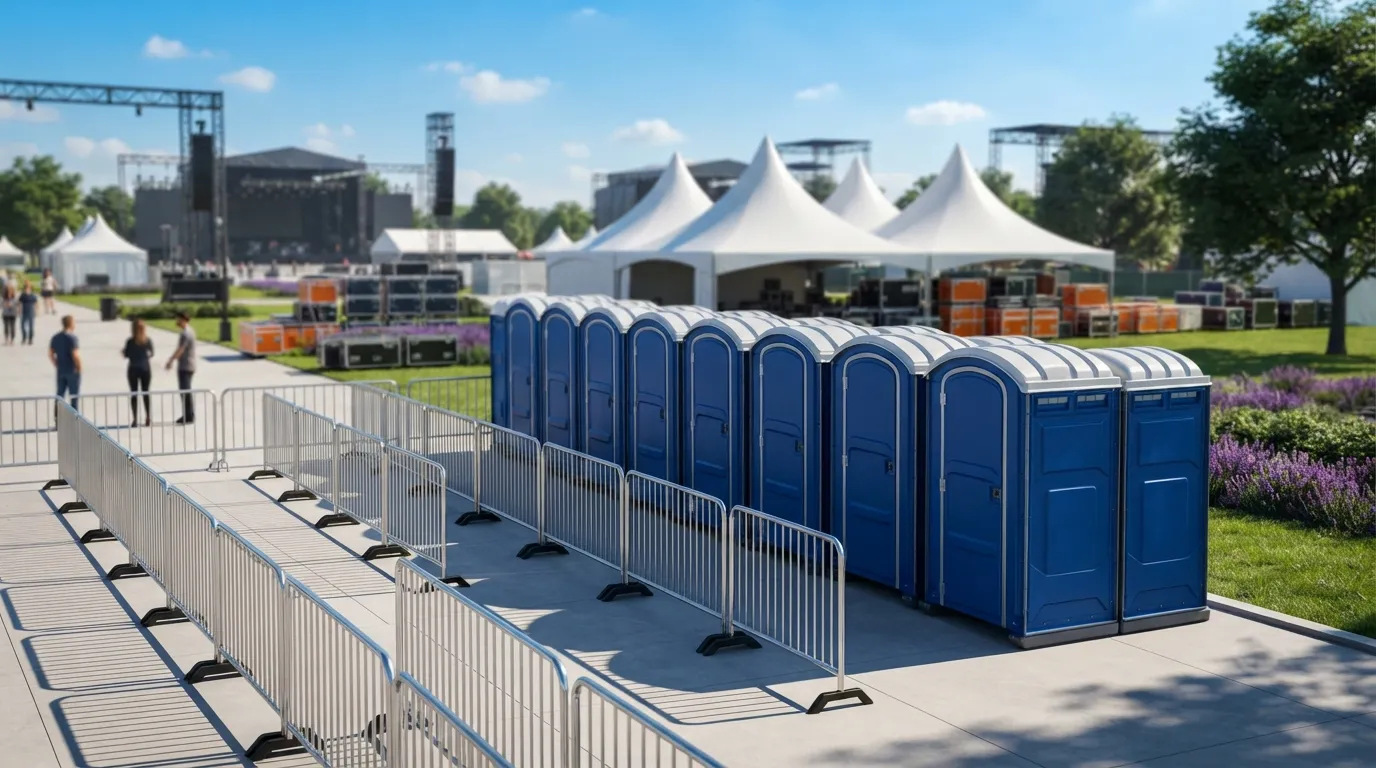
Spacing between units matters as much as the count. ADA Standards section 304.3.1 calls for a 60 inch turning circle at accessible units, so leave real space around them, not just a narrow gap. For general placement, OSHA 1926.51(c)(1) sets the ratio: one toilet for 20 workers or fewer, then one toilet and one urinal per 40 workers as headcount climbs, and one per 50 once you're at 200 or more. Run the numbers on our how many porta potties do I need page before you order.
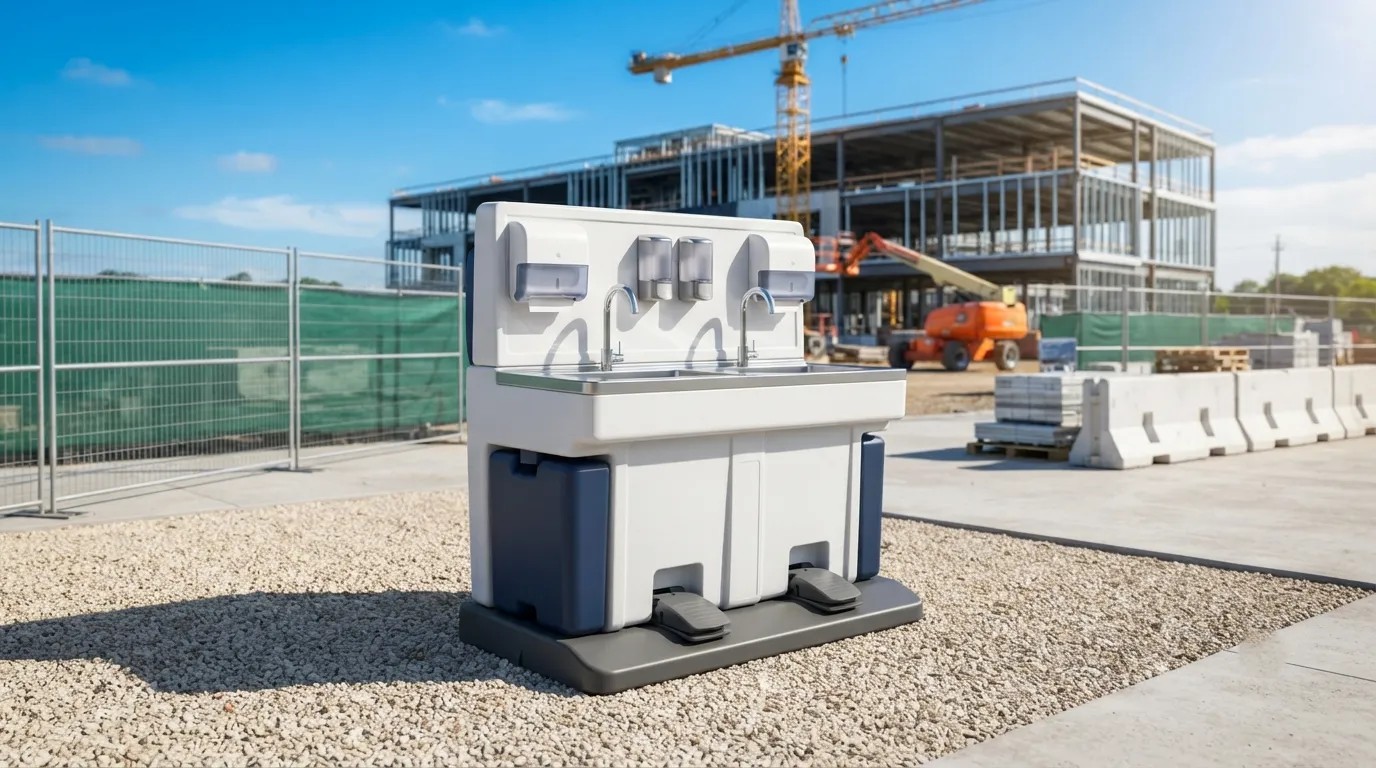
Group units in twos or threes near high-traffic zones instead of scattering singles across the lot. It cuts service time and keeps walking distance short. If your crew is doing paint, coatings, herbicides or insecticide work, OSHA 1926.51(f)(1) requires washing facilities nearby, so place a handwashing station rental or portable sink rental close to that work, not back by the office trailer. Note that hand sanitizer alone doesn't satisfy 29 CFR 1910.141(d)(2), which calls for soap and towels or a hand-drying device. A sink missing parts, like an Ozark River portable sink replacement parts issue, can knock a whole handwash line out of service, so check units before delivery day rather than after.
Does placement change for trailers, dumpsters, and storage containers?
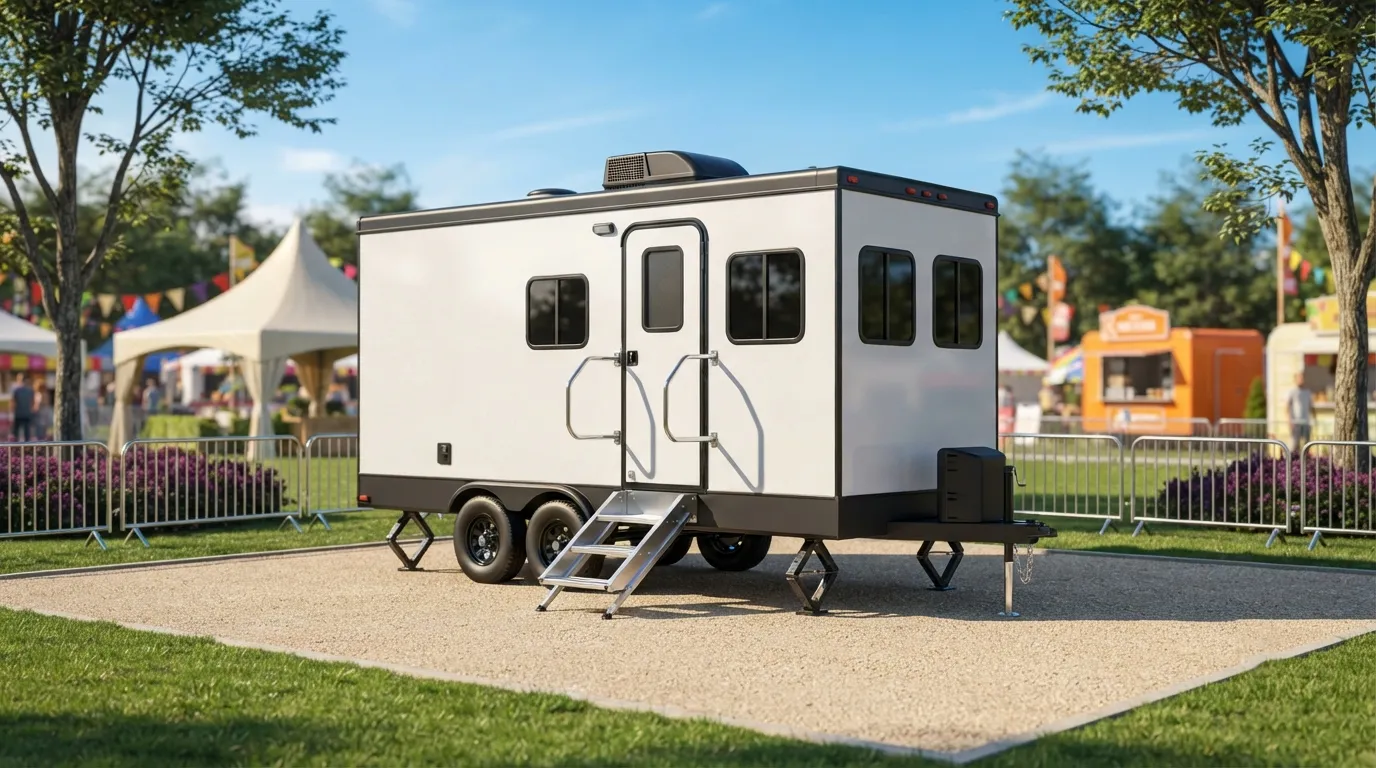
Yes, each has its own footprint problem. A restroom trailer rental needs level ground and often a hookup, so a Pomona site with grade changes may need a smaller unit like the 2 stall restroom trailer rather than an 8-stall unit that needs more pad space. Dumpsters need that same 60 feet of straight clearance for the roll-off truck, plus room for the container to sit clear of overhead lines, so check the dumpster sizes and dimensions page against your lot before ordering a 20 yard dumpster rental or larger.
Storage containers and mobile office trailers need flat, compacted ground too. If a mobile office trailer rental shows up with a damaged frame or you need mobile office trailer replacement doors, that's a maintenance call to the rental company, not a DIY fix on site. For septic work, placement of a pump truck follows the same access logic: a septic service, whether it's a routine call or something closer to a Placerville septic pumping service model in another region, still needs clear truck access to the tank. Locally, our septic pumping service and emergency septic service pages cover access requirements in more depth. Montclair sits 4.6 miles east of Pomona and La Verne is 5.1 miles north, both served by the same placement rules if your project spans city lines.
How far from a building should a porta potty be placed?
Keep it close enough to cut walking time but clear of doorways, windows, and air intakes. There's no fixed distance in our fact set, but OSHA's general standard assumes reasonable proximity. Check the porta potty rental page for local delivery specifics.
Can I place a porta potty on the street in Pomona?
Placement in the public right of way needs confirming with the City of Pomona before delivery. We don't have a verified fee or rule to quote, so call the city directly and don't rely on a guess from anyone else.
Do ADA units need extra clearance?
Yes. ADA Standards section 304.3.1 requires a 60 inch turning circle, and section 403.5.1 sets a 36 inch minimum clear route width. Build both into your layout before the truck arrives, especially for ADA accessible porta potty placements at events.
How much clearance does a delivery truck need?
Plan on roughly 60 feet of straight clearance behind the truck for roll-off and restroom deliveries. Tight driveways or sharp turns can block delivery entirely, so walk the route first.
Does a septic pump truck need special access too?
Yes, same logic as a delivery truck: clear, straight access to the tank matters most. See septic tank pumping cost and how often to pump a septic tank for scheduling details tied to access.
Next step
Get a delivery date
Tell us the address, the dates and the headcount. We size the order and confirm the route.