
How many restrooms does a county fair need?
Start with attendance, then split it by hours on site, not just total gate count. A fair pulling steady crowds over 8 to 10 hours needs a different ratio than a two-hour parade crowd. Our how many porta potties do I need guide walks through the math, but the short version: budget more units than a construction site would ever need, because fairgoers do not wait in line the way crews do.
ANSI/PSAI Z4.3 sets a baseline service interval of one visit per week for up to 10 users over a 40 hour week, which is built for offices and job sites, not weekend crowds numbering in the thousands. A fair needs daily or even mid-event servicing, not a weekly stop. We scale service frequency to the event, not the standard.
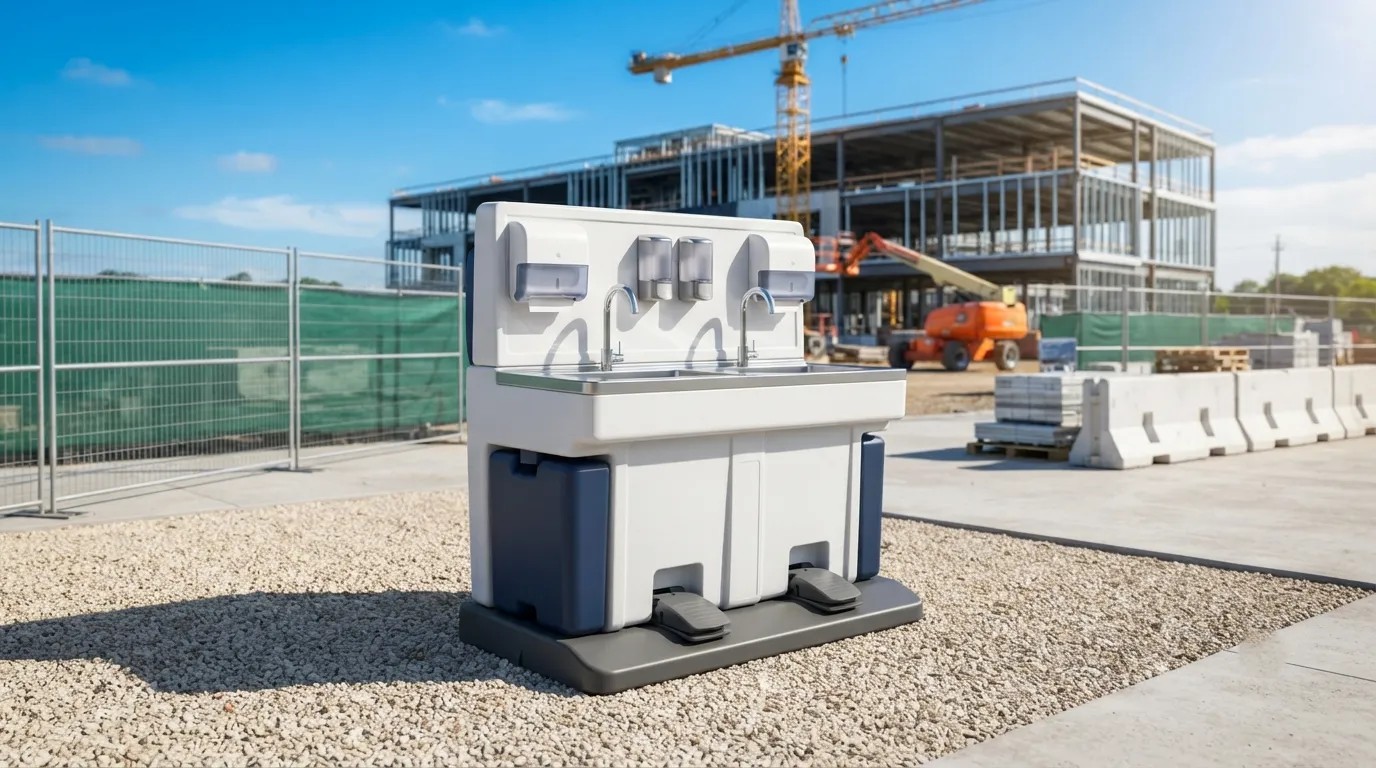
ADA Standards section 213.2 requires that where single-user portable units are clustered, at least 5 percent be accessible, with never fewer than one unit. For a fair drawing enough crowd to need a dozen standard units, that means at least one ADA-compliant stall, sized with a 60 inch turning circle per ADA Standards section 304.3.1. Pair those with a handwashing station rental near food vendors, since fairs concentrate eating and hand contact in tight areas. For crowds expecting long midway lines, a deluxe flushable porta potty upgrade near VIP or sponsor areas cuts complaints fast.
What restroom options work best for a Pomona county fair?
Layout beats unit count. Cluster restrooms near midways, grandstands and food courts, not tucked behind maintenance sheds where nobody can find them. A portable restroom rental plan for a multi-day fair usually blends standard units for general traffic with a restroom trailer rental for sponsor tents or VIP sections. An 8 stall restroom trailer handles heavy grandstand traffic better than scattered singles, and it cuts the line-forming problem that plagues single-stall clusters.
Ground surface matters too. ADA Standards section 302.1 requires stable, firm, slip-resistant surfaces on the accessible route, and section 403.5.1 sets a 36 inch minimum clear width for that route. Fairground turf and gravel lots in Pomona often need matting or plywood runners under ADA units to meet that standard, especially after irrigation or a rain week softens the ground. Door clearance matters on trailers too: ADA Standards section 404.2.3 sets a 32 inch minimum clear door opening, which rules out narrower trailer doors for accessible stalls.
Consider a temporary fence rental around restroom clusters to control queue flow and keep foot traffic organized, particularly near stages or livestock areas where crowd density spikes. A light tower rental near restroom banks keeps evening fairgoers safe walking back from grandstand events, and OSHA 1926.56(a) sets minimum illumination intensities that guide how bright those areas should be, even though that standard targets construction sites rather than fairgrounds.
Why plan restrooms early for a Pomona fair?
Delivery logistics eat time that fair organizers do not have during setup week. A roll-off delivery needs about 60 feet of straight clearance behind the truck, and restroom trailers need similar room to park and level. Fairground access roads in Pomona are often shared with vendor trucks, livestock trailers and stage equipment, so scheduling restroom drops before the crowd logistics get complicated saves headaches. Booking through request a quote two to three weeks out gives Pomona Porta Pros room to confirm placement against other vendor deliveries.
Servicing during the event matters as much as initial placement. A standard unit holds a 60 to 70 gallon tank, which fills fast under fair-level traffic, so daily servicing during multi-day fairs is standard practice rather than an upgrade. Check our how often are porta potties cleaned page for what a realistic service schedule looks like across a three or four day run. Nearby fairs in La Verne, 5.1 miles north of Pomona, and Covina, 8.9 miles west, follow similar servicing patterns once crowd counts climb past a few thousand.
| unit | duration | typical |
|---|---|---|
| standard | event | 400 |
| deluxe | event | not listed for event; see day/week |
| trailer | event | 3500 |
Event-duration pricing for standard units runs from 200 to 800 depending on scale and add-ons; multi-stall trailers for a full fair run land closer to the trailer event band above. For exact numbers tied to your fair's footprint, our restroom trailer rental cost page breaks down what drives the range.
How far in advance should I book fair restrooms?
Two to three weeks minimum, longer if your fair overlaps with another big Pomona event competing for the same trucks and units. Fair-season weekends fill fast. Contact us through contact as soon as your date and attendance estimate are set.
Do county fairs need ADA-compliant restrooms?
Yes. ADA Standards section 213.2 requires at least 5 percent of clustered single-user units be accessible, never fewer than one. See ADA restroom requirements for full placement specs including door width and turning space.
Can Pomona Porta Pros service restrooms mid-event?
Yes, daily or multi-times-daily servicing is standard for fair-scale crowds. Tank capacity fills faster than weekly-service jobs, so we schedule pumping trucks around fair hours to avoid blocking foot traffic near stages or vendor rows.
What size restroom trailer fits a mid-size fair?
A 4 stall restroom trailer handles moderate grandstand crowds, while an 8 stall restroom trailer suits larger multi-day fairs with steady all-day attendance. Match trailer size to peak-hour headcount, not total gate.
Do fairs need handwashing stations separate from restrooms?
Yes, especially near food vendors and livestock areas. 29 CFR 1910.141(d)(2) requires soap and towels or a hand-drying device at washing facilities; hand sanitizer alone does not satisfy that standard for food-adjacent handwashing needs.
Next step
Get a delivery date
Tell us the address, the dates and the headcount. We size the order and confirm the route.