
How Do Porta Potties Work?
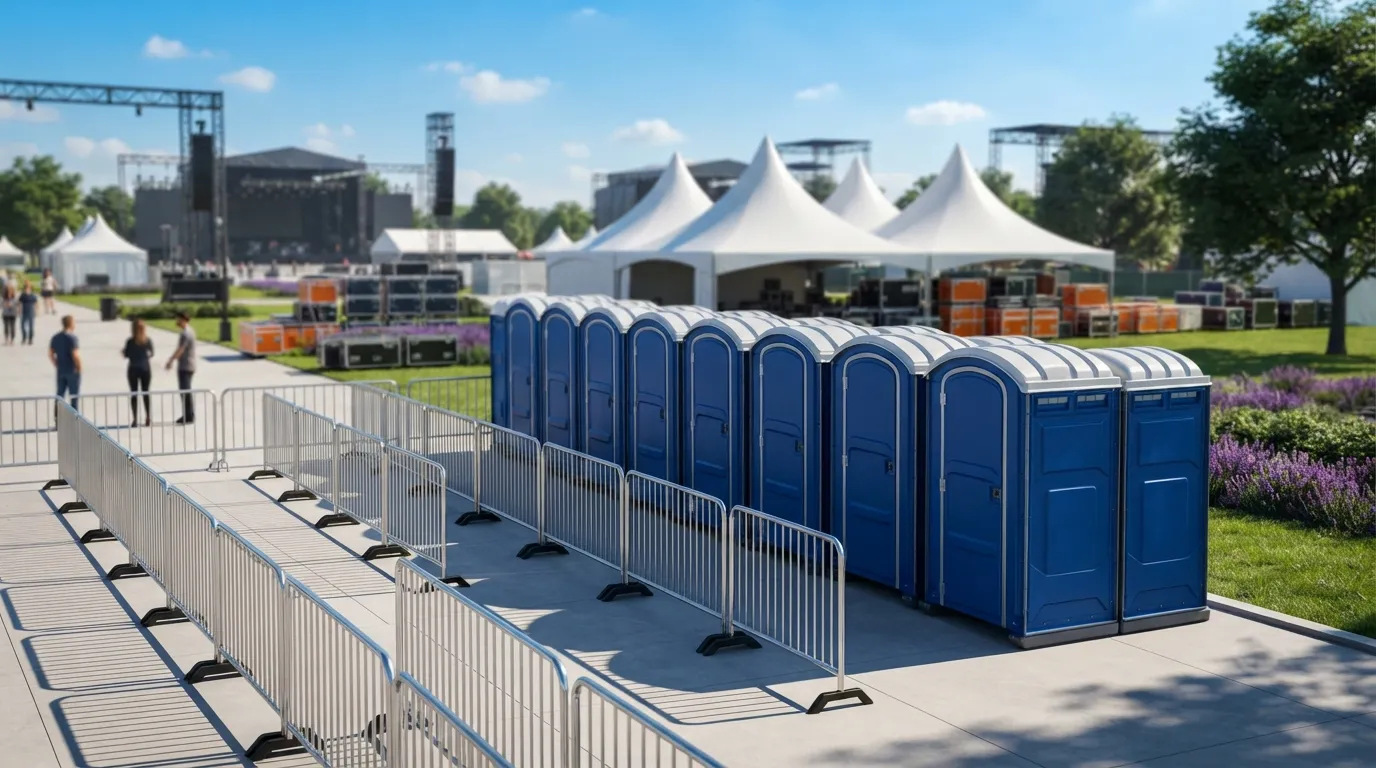
There's no flush, no water tank overhead, no pipe running out to a sewer line. Waste drops straight into the 60 to 70 gallon holding tank below the seat. A blue or green chemical deodorizer sits in that tank, breaking down solids and knocking back the smell, which answers most of what people mean when they search portable toilet chemicals near me. A vent stack runs up the back of the unit and pulls odor up and out instead of into the stall. That's the whole mechanism. A standard unit measures about 44 by 48 inches on the ground and stands roughly 92 inches tall, so it's built to be dropped, used hard, and pumped clean without any hose bib nearby. If you're picturing this as a diagram, think three layers stacked: seat and stall on top, tank in the middle, vent running the height of the unit. For a construction worker on a Pomona job site, that means no walk to a trailer bathroom, just the unit parked near the work zone. Curious what's actually inside one before you rent? The standard porta potty rental page breaks down the build in more depth, and porta john rental covers the same unit under its other common name.
How Do Flushable Porta Potties Work?
A deluxe flushable unit adds a small onboard freshwater tank and a foot pump or pressurized flush that pushes water into the bowl, rinsing waste down into the holding tank below. It still isn't tied to a sewer line. It just carries its own water supply instead of using chemical breakdown alone, so the bowl looks and feels closer to a home toilet. That water tank needs refilling on service visits, which is part of why deluxe flushable porta potty units run a service interval closer to the ANSI/PSAI Z4.3 baseline of one visit per week for up to 10 users across a 40 hour week. Weddings and corporate events in Pomona lean toward this option because guests notice the difference. If you're comparing it against a standard unit for a backyard event, the deluxe flushable porta potty page has the side by side, and wedding restroom rental covers guest-count planning for that use case specifically.
How Do Camping Porta Potties Work?
Camping and off-grid units work the same way as a jobsite unit, just smaller and often more portable, sometimes a personal cassette-style toilet you empty yourself rather than a stall Pomona Porta Pros services on-site. For group camping or an outdoor event without utility access, an ADA accessible unit follows ADA Standards section 304.3.1, requiring a 60 inch turning circle inside, and the door opening meets ADA Standards section 404.2.3 at 32 inches clear. Where several units get placed together, ADA Standards section 213.2 requires at least 5 percent of the cluster be accessible, never fewer than one. None of that changes the core mechanism: holding tank, chemical treatment, vent stack. What changes is size and servicing frequency. For a weekend trip or rural property near Pomona, check camping porta potty options, and if you're scoping units for a farm or agricultural operation, farm and agricultural restrooms covers field placement under OSHA 1928.110's quarter-mile walk standard.
How Does a Portable Sink Work?
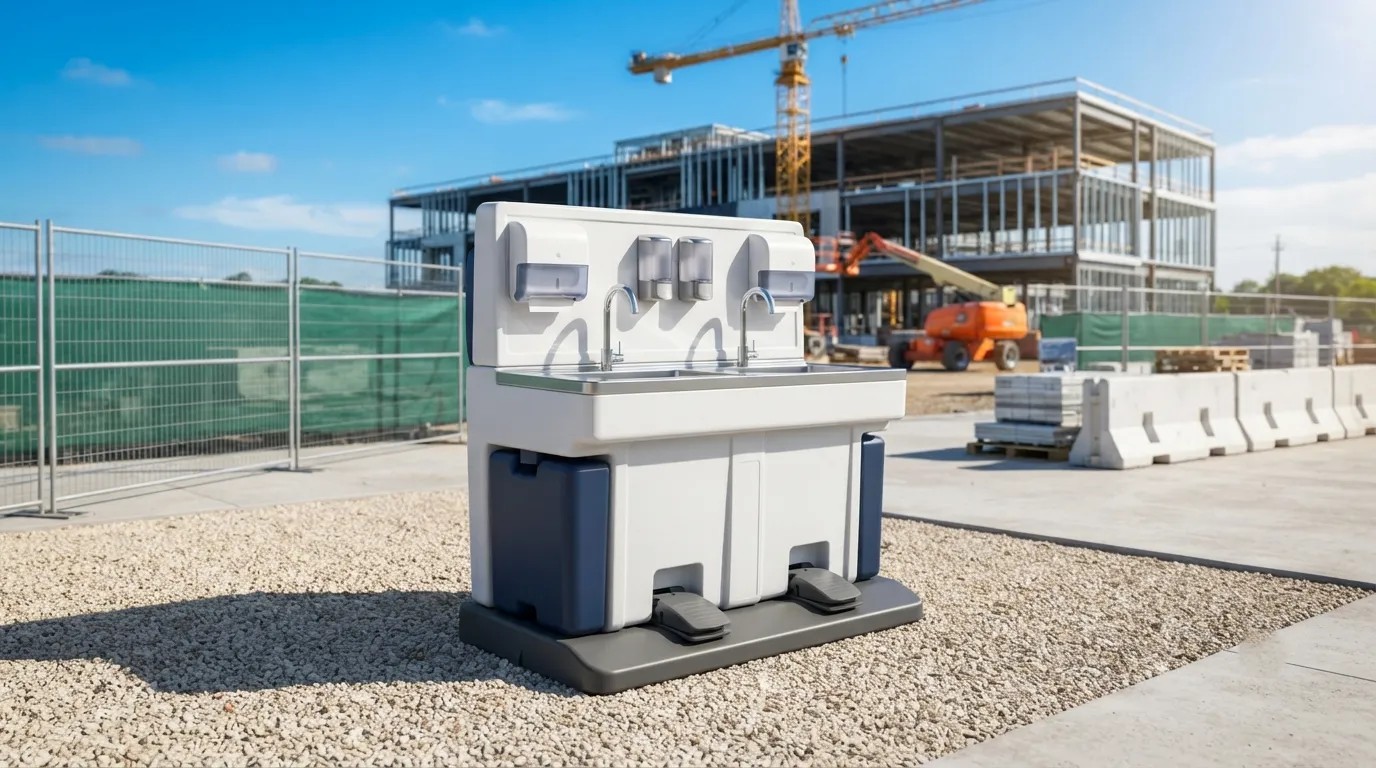
A portable sink runs on the same self-contained logic: a freshwater tank feeds the faucet, usually by foot pump or small pressurized pump, and greywater drains into a separate tank underneath instead of a sewer line. Soap and towels or a hand-drying device are required under 29 CFR 1910.141(d)(2), since hand sanitizer alone doesn't satisfy that standard. On a paint, coating, or pesticide job specifically, OSHA 1926.51(f)(1) requires washing facilities for that contaminant exposure, separate from general jobsite sanitation under OSHA 1926.51(c)(1). A construction worker running to a porta potty on a lunch break in Pomona often needs that sink right next to it, which is why most site plans pair the two. Renting them together also usually beats renting mismatched schedules. See handwashing station rental for full unit specs, portable sink rental for the sink alone, and handwashing requirements if you need the regulatory side spelled out for a permit application.
FAQ
How often does the tank need pumping?
It depends on user count and unit type, but a standard unit on a job site typically follows the ANSI/PSAI Z4.3 baseline of one service visit weekly for up to 10 users across a 40 hour week. Busier sites need twice-weekly service. Pomona Porta Pros schedules around actual headcount, not a flat calendar.
Do porta potties smell if serviced regularly?
Not much. The chemical treatment and vent stack handle odor between services, and regular pumping keeps the tank from filling past where the chemical can work. Heat and low service frequency are what cause smell complaints. See do porta potties smell for more detail on what drives it.
What chemicals go in a porta potty tank?
A blue or green deodorizing and deodorizing-enzyme mix, designed to break down solids and mask odor between pump-outs. It's not a strong industrial chemical, and it's non-hazardous in normal use. Pomona Porta Pros handles the mix and dosing as part of every service visit.
Can I rent a flushable unit for a home event?
Yes. Deluxe flushable units work well for backyard parties, weddings, and small gatherings where guests expect a closer-to-home experience. Pricing runs higher than a standard unit given the onboard water system. Check deluxe flushable porta potty for specs and request a quote for a number based on your event size.
How many units does a construction site need?
OSHA 1926.51(c)(1) sets the ratio: one toilet for 20 or fewer workers, then one toilet and one urinal per 40 workers up to 200. Use the how many porta potties do I need calculator or OSHA portable toilet requirements to size a Pomona jobsite correctly before you order.
Next step
Get a delivery date
Tell us the address, the dates and the headcount. We size the order and confirm the route.